 Chat With UsChat With Us
By Mir Moomin • 23 September 2026
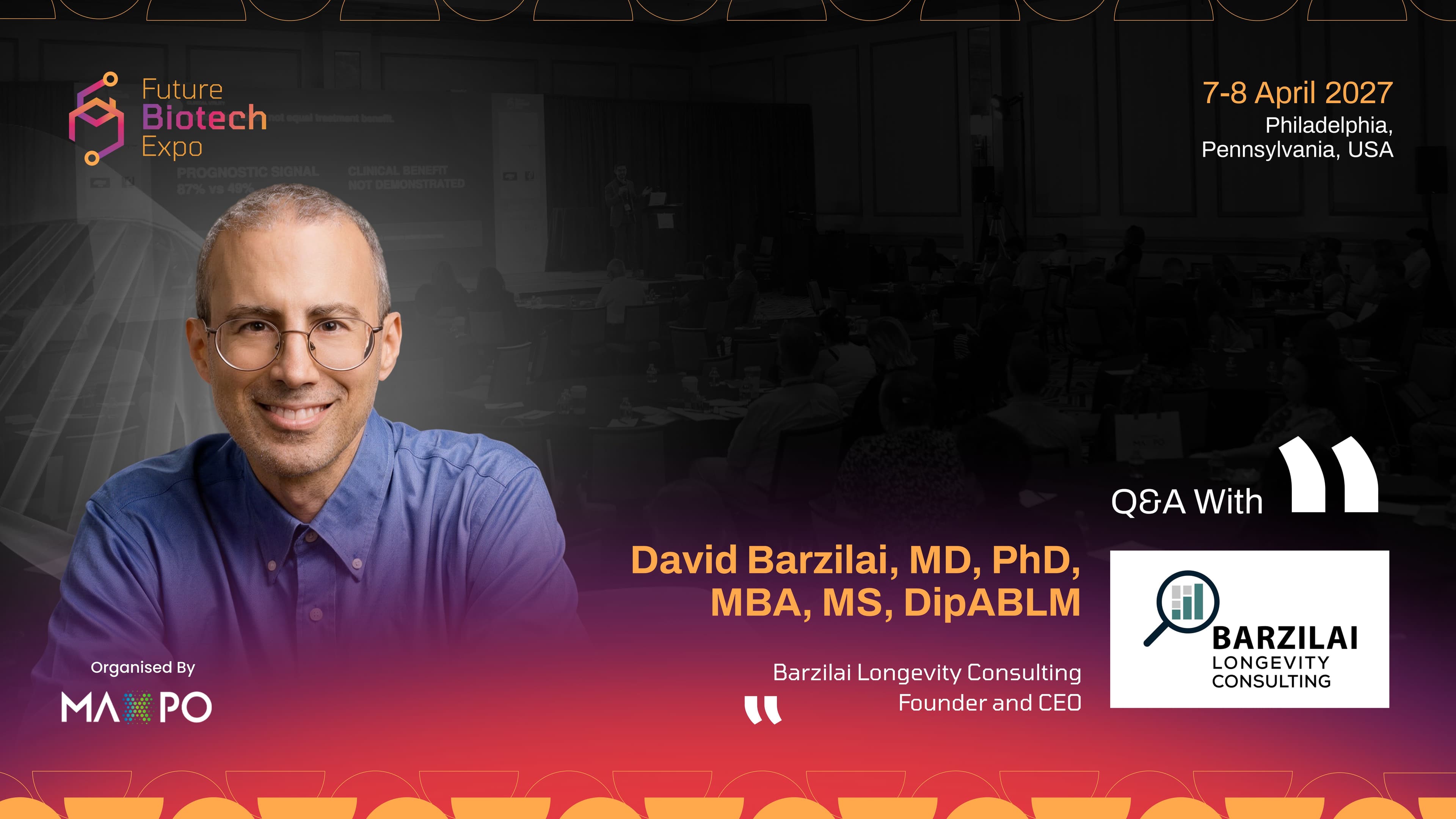
1. What are the most promising developments in longevity science today, and which areas do you believe could have the greatest impact on extending healthy human lifespan?
Three things have changed that I'd call substantive.
The first is that a drug aimed at a driver of age-related disease finally produced hard outcome data at scale. SELECT randomized 17,604 adults with cardiovascular disease and overweight or obesity but without diabetes, followed them a mean of about 40 months, and showed a 20 percent relative reduction in cardiovascular death, heart attack and stroke (Lincoff et al., NEJM 2023). FDA approved a cardiovascular risk reduction indication in March 2024. The molecule didn't change. What clinicians, regulators and payers could do with it changed, because the evidence changed.
The second is that AI has compressed the front end of discovery. Insilico's TNIK inhibitor went from target identification to candidate nomination in roughly 18 months, with 78 molecules synthesized, and the discovery was published in Nature Biotechnology in 2024. Conventional first-in-class discovery runs four to six years and thousands of compounds. Its Phase 3 in idiopathic pulmonary fibrosis opened in July 2026 with 320 patients across 47 centers, and that part wasn't compressed at all.
The third is that partial epigenetic reprogramming reached a human being. Life Biosciences cleared an IND for ER-100 in January 2026 and dosed its first patient in June, in a Phase 1 for optic neuropathies. Starting there is the right call. A local delivery route, a narrow indication and safety endpoints are how you find out whether a platform is safe before anyone asks it to do more.
None of those three is where I'd put the greatest impact over the next decade. That will come from applying what we already know, earlier and more systematically: cardiometabolic risk, cardiorespiratory fitness, sleep, cancer screening, hearing, cognitive risk factors. The global healthspan-lifespan gap is 9.6 years, and the United States has the widest gap in the world at 12.4 years (Garmany and Terzic, JAMA Network Open 2024). Almost none of that gap is waiting on a new discovery. It's waiting on delivery.
2. How are artificial intelligence, biological-age assessments, and digital biomarkers changing the way researchers and clinicians understand, measure, and manage the aging process?
Measurement has become cheap and fast. Proving that a measurement should change a decision has not.
A 55 year old today can arrive with their genome, proteome, methylation profile, body composition, a measured VO2max and eighteen months of continuous glucose data. In 2005 the same person got lipids, blood pressure and glucose. That's a real expansion and I use a good deal of it. What hasn't kept pace is the evidence telling anyone what to do differently because of a particular result.
Biological age is the clearest case. The most interesting result in the field last year came from stored serum in the rentosertib Phase 2a trial: 42 participants, 2,841 proteins, six independently developed proteomic aging clocks, and all six moved toward lower predicted biological age (Nature Biotechnology, September 2026). I find that striking. It's also an exploratory analysis in 42 people, and the clocks trained on mortality didn't move the way the ones trained on chronological age did. Those are two different claims, and they tend to get reported as one.
There's also a reliability problem that gets too little attention. Sehgal and colleagues benchmarked 18 epigenetic clocks and found excellent technical reproducibility alongside biological instability, with scores shifting in response to a meal, short-term stress, or a change in altitude (Aging Cell, 2026). Earlier work found replicate differences of up to nine years on some clocks, brought under a year with principal component versions (Higgins-Chen et al., Nature Aging 2022). If a meal can move the number, an uncontrolled before-and-after study can produce something that looks like rejuvenation and isn't.
In clinic I handle it this way. I report biological age as a research-grade measure, I don't treat the number, and I don't let it override a coronary calcium score or a measured VO2max. Where AI is delivering right now is target discovery, trial design and enrichment, imaging and pathology reads, and risk stratification. Those are real, and they sit mostly upstream of the patient.
3. What major breakthroughs or challenges do you see emerging in brain health, cognitive longevity, Alzheimer's disease, and other neurodegenerative conditions?
The breakthrough is diagnostic, and it has already happened. As of August 2026 the FDA has cleared four blood-based biomarker tests for Alzheimer's pathology, beginning with Fujirebio's Lumipulse in May 2025 and most recently Roche's Elecsys pTau217, cleared to both rule in and rule out amyloid pathology in primary as well as specialty care. Diagnosis is moving from PET scans and lumbar punctures to a blood draw at a routine visit. For a disease whose pathology begins fifteen to twenty years before symptoms, that matters enormously.
The challenge arrives right behind it. We've made diagnosis far easier without making treatment much better. In CLARITY-AD, lecanemab reduced decline on CDR-SB by 27 percent over 18 months, which in absolute terms was 0.45 points on an 18-point scale. Donanemab showed slowing in a broadly similar range in TRAILBLAZER-ALZ 2. Whether a difference of that size is meaningful to a patient and a family is disputed among serious people, and I don't think the field has settled it.
The safety burden is not minor either. ARIA with brain edema occurred in 12.6 percent of lecanemab patients against 1.7 percent on placebo, and microhemorrhage in 17.3 percent against 9.0 percent. With donanemab the rates ran higher, around 24 percent and 31 percent. Deaths have occurred in trials and in open-label follow-up, with risk concentrated in APOE4 homozygotes and patients on anticoagulation. Both drugs require APOE genotyping and serial MRI. European regulators approved lecanemab only for patients who are not APOE4 homozygotes. My own practice is to offer these therapies to appropriate patients alongside neurology, after full counselling on the size of the benefit and the risk, and not to offer them off label to people who are cognitively normal.
Prevention is where I'd put most of the attention, and the evidence there points at ordinary things. The 2024 Lancet Commission attributes around 45 percent of dementia cases worldwide to 14 modifiable risk factors, with midlife LDL cholesterol and untreated vision loss newly added. US POINTER randomized 2,111 at-risk older adults and found a structured multidomain program outperformed a self-guided one, at 0.243 versus 0.213 standard deviations of cognitive gain per year (JAMA, 2025). Both arms improved. The difference is small, and the comparator was active rather than nothing, which makes the result more informative and the effect smaller than the coverage suggested.
The most under-used item on that list is hearing. In ACHIEVE, hearing intervention produced no overall effect across the full cohort but cut three-year cognitive decline by roughly 48 percent in the prespecified higher-risk ARIC subgroup (Lancet, 2023). Nobody calls a hearing aid a breakthrough. In the right patient it may do more than anything else currently available to us.
4. How can biotech companies translate promising longevity research into safe, clinically validated, and accessible therapies for patients?
Pick a disease. The companies making real clinical progress are the ones that stopped waiting for a regulatory path for aging and went through an indication that already exists.
Every program now in humans got there that way. Rentosertib is in Phase 3 for idiopathic pulmonary fibrosis. ER-100 is in Phase 1 for optic neuropathies. Semaglutide earned its cardiovascular indication through SELECT, not through an aging claim. Loyal's canine program is financed against FDA technical milestones, which is a large part of why capital follows it. The counterexample is instructive. TAME had a design FDA was willing to engage with and never got funded, because no single sponsor had a commercial reason to pay for it. The regulatory obstacle was partly solved. The funding obstacle wasn't.
Second, design the evidence plan backwards from the decision it has to change, and name that decision out loud. Is it a regulator's, a clinician's, or a payer's? Those call for different trials. A lot of money gets lost by companies that design for publication or for the next round, then try to retrofit a registrational package.
Third, understand the difference between formal biomarker qualification and program-specific acceptance. Qualification through FDA's Biomarker Qualification Program is public and reusable by anyone within a defined context of use. Acceptance inside a single application is narrower and doesn't carry to the next company. Sponsors conflate the two, and I've watched the resulting evidence plans get corrected at considerable expense during diligence. For context, no biomarker of biological aging has been qualified for an aging context of use.
Access gets decided at trial design, not at launch. Who you enroll shapes the label, the label shapes who can be prescribed the drug, and the evidence you generate determines whether anyone will pay for it. SELECT is the clearest example. Same molecule, new evidence, new indication, and Medicare Part D coverage became possible for that indication.
5. What should investors, healthcare professionals, and the public look for when evaluating longevity technologies and distinguishing genuine scientific progress from industry hype?
I ask one question before any other. What result would prove this wrong? If nothing could, it's marketing, whatever credentials are attached to it.
After that, four practical checks.
Is there a registered trial with pre-specified endpoints, or are there testimonials, press releases and conference posters? Pre-specification is what separates a finding from a story told afterward.
Is the endpoint something that happens to a person, or a number on a report? If it's a number, has anyone shown that moving it changes what happens to the person? That link is missing far more often than people assume, and its absence usually isn't a technology failure. It usually means nobody planned the study that would establish it.
Who verified it independently, and what happened when someone with no financial interest looked?
And what does the business model require the customer not to understand? It's an uncomfortable question and it predicts more than the other three.
Two illustrations. On biological age, the reliability data I mentioned means an uncontrolled before-and-after design can manufacture apparent rejuvenation out of measurement noise. On the gap between capability and benefit, NHS-Galleri is the best-executed demonstration we have. Roughly 143,000 people randomized, five years of follow-up, and the primary endpoint of reducing late-stage cancer incidence was not met, with 706 late-stage cancers in the screened arm against 688 in the control arm. Inside that result, Stage IV diagnoses fell 14 percent, early-stage diagnoses rose 16 percent, and the late-stage ratio improved with each successive screening round. Nothing in that test's sensitivity or specificity predicted any of it. Finding out required randomizing 143,000 people and waiting.
That applies well beyond cancer screening. Almost everything you'll see at an event like this works, in the sense that it does what it says it does. The question worth asking is whether anyone can yet show that using it leaves a person better off.
6. What role will collaboration between biotech companies, academic institutions, clinicians, investors, and policymakers play in shaping the future of longevity and preventive healthcare?
The thing this field can't build alone is its measurement and endpoint infrastructure, and that's where collaboration stops being a conference word and becomes the binding constraint.
Validated aging biomarkers and accepted endpoints are public goods. Every company needs them and no company can justify paying for them, because the benefit accrues to competitors. That's textbook underinvestment, and it's what happened to TAME. So the most important development of the past year wasn't a molecule. In February 2026, ARPA-H awarded up to $144 million over five years to seven teams, four academic and three from biotech, under the PROSPR program, on milestone-based contracts, with the stated aim of building the groundwork for phase 3 healthspan trials and working with regulators on what those trials would have to show. Whatever you make of any individual award, that is the right structure. Public money is paying for infrastructure that private money has no rational reason to fund.
The parallel work on validation standards, including the Biomarkers of Aging Consortium's framework separating predictive, responsive and biological validation, is the other half of the same project.
The participant most often left out is the practicing clinician. Most companies talk to investors and regulators throughout development and speak to physicians only at launch. The clinician is the person who can tell you whether a result would actually change how a patient is treated, and that answer costs far less to hear in year two than in year seven. The same goes for patients.
Investors have a role here too, because what gets funded shapes what gets tested. Capital that rewards pre-registration, published negative results, and a clear separation between what's proven and what's promising will pull the field toward work that holds up.
7. Longevity research is attracting billions in investment, but are we genuinely extending healthy human lifespan, or are we simply commercialising the fear of aging and selling hope faster than science can deliver results?
Both are happening. They aren't the same industry, and most of the confusion in this conversation comes from treating them as one.
Start with the hard part. No therapy has been shown to slow human aging. Not one. There's no approved indication for it, no qualified biomarker for it, and no completed trial demonstrating it. Anyone telling an investor otherwise is either confused or selling.
Now the other half. Are we extending healthy human lifespan? Yes, slowly, and almost entirely through work nobody labels longevity. Tobacco control, blood pressure and lipid management, cancer screening, cardiorespiratory fitness, and now metabolic drugs with hard outcome data behind them. None of that is new, and it accounts for essentially all of the gains we can point to.
The fear is not manufactured. The United States has the widest healthspan-lifespan gap in the world at 12.4 years. People are right to worry about spending a decade of their life unwell. What gets sold against that worry often has nothing behind it, and that is the actual problem.
On the money, the first quarter of 2026 saw roughly $3.74 billion raised across 49 financings, up 56 percent year over year, by Longevity.Technology's analysis of PitchBook data. Some of that is drug development against real indications with real endpoints. Some of it is a consumer market selling a number that has no outcome attached to it yet. A useful filter is whether a business survives its own customers becoming more sophisticated. The serious companies are built for exactly that.
What would change my answer is a randomized trial in humans, with a clinical outcome that matters to a person, showing a benefit from an intervention aimed at aging biology that a disease-specific explanation can't account for. PROSPR is the first serious attempt to build the runway for that kind of trial. Ask me again in five years and the answer may be different. For now I'd rather give an accurate one than an encouraging one.
8. How can industry events like Future Biotech Expo help accelerate collaboration, knowledge exchange, investment, and innovation across the biotech and life sciences ecosystem?
The events worth the travel are the ones where people are allowed to disagree on stage.
Three things a good conference does that nothing else does as well. It puts people in a room who would never cold email each other, and the pairing that matters most in this field is the founder and the clinical trialist, or the scientist and the person who has actually carried a product through FDA. Second, it lets claims be tested in public, which is faster than journal peer review and the only setting where an audience watches someone answer a hard question in real time. Third, it compresses diligence. A day of conversations can save an investor two months.
What separates events that do this from events that don't is programming. If every session is a company telling its own story with its own slides, the room learns little it couldn't have gotten from a website. My suggestion to any organizer, this one included, is to put someone on each panel whose job is to press the claim, to ask presenters directly what evidence would change their minds, and to make room for negative results, which are the most valuable and least presented material in biotech.
I'd also push to bring practicing clinicians into rooms that are usually founders and investors. The field has a persistent blind spot about the difference between a result that's publishable and a result that changes how a patient gets treated. Those two groups rarely sit together, and when they do, both leave with something.
9. With Philadelphia's strong presence in biotechnology, cell and gene therapy, pharmaceutical research, and life sciences talent, why is it the right market to host the second edition of Future Biotech Expo in 2027?
Philadelphia's record is in translation, in carrying science all the way to an approved product, and translation is where biotech most often stalls.
In a single year, 2017, two things came out of a few blocks of West Philadelphia that changed what medicine could offer. Kymriah, the first CAR-T therapy approved anywhere, came out of Carl June's laboratory at Penn, with the pediatric work at Children's Hospital of Philadelphia. Luxturna, the first gene therapy for an inherited disease approved in the United States, came from Spark Therapeutics, itself a CHOP spinout. Separately, the nucleoside-modified mRNA work of Katalin Karikó and Drew Weissman at Penn, recognized with the 2023 Nobel Prize in Physiology or Medicine, made the COVID vaccines possible.
None of those stopped at publication. They became products that patients received, and getting that far took the whole stack: academic science, clinical trial capability inside a major health system, manufacturing, and a regulatory relationship built through repeated first-in-class approvals. Greater Philadelphia now counts more than 60 cell and gene therapy companies and institutions, alongside Penn, CHOP, Jefferson, Temple, Fox Chase and Wistar, and a substantial pharmaceutical presence across the surrounding corridor.
That combination is the one this side of biotech needs. Longevity research has no shortage of hypotheses. What it lacks is a reliable route from a promising mechanism to a regulated, reimbursed therapy a patient can actually be given. Philadelphia has travelled that route more times, and in harder categories, than almost anywhere.
I'd add one thing. Putting people in the same city does not make them talk to each other, and there are dense clusters where the academics, the companies and the clinicians barely overlap. The value of holding the event here will come from getting the people who completed those translations in front of the people attempting the next ones, and that comes down to how the sessions are built.
About Dr. David Barzilai, MD, PhD
Dr. David Barzilai, MD, PhD, MBA, MS, DipABLM, is a longevity medicine physician and Lecturer at Harvard Medical School, focused on evidence-based and precision approaches to healthy longevity. As founder and CEO of Barzilai Longevity Consulting, he advises biotech companies, longevity centers, clinicians and health systems on clinical strategy, evidence, and whether interventions are delivering meaningful outcomes, including ongoing advisory board work (https://www.barzilaiconsulting.com/advisory). He also runs a private practice for executives and family offices, which gives him a view from both the operator and patient sides of the field. He is Medical Editor of Harvard Health Publishing's Special Health Report on Longevity, a Co-Editor of Frontiers of Longevity Science (Springer Nature), and an inaugural faculty member and Trustee at the Geneva College of Longevity Science.
Connect on LinkedIn: https://www.linkedin.com/in/agingdoc/